Cowpea
Also called: لوبيا · دقس · Loubia · Black-eyed pea
The summer legume. It takes heat and salinity that would kill a green bean, and belongs alongside okra and molokhia in the Qatari summer.
The year at a glance
Each month is split in half. The outline marks now.
Stage by stage
Stage 1 of 9
Seed
Days 0–3
Seed
Days 0–3The seed sits in the soil taking up water and swelling. Nothing shows above the surface — everything is happening underground.
Do now
- Water lightly and often so the soil stays damp but never soaked. Letting it dry out between waterings kills the seed before it sprouts.
- Cover the surface with a thin layer of straw or compost to slow evaporation and steady the temperature.
- Label what you sowed and when. You will need the date to work out the harvest.
Watch for
- A hard crust forming on sandy soil after watering, which traps the sprout underneath. Break it gently.
- Ants carrying small seeds away — a very common problem in Qatari gardens.
In Qatar
Needs soil above 20 °C. Sow in March once the ground has genuinely started to warm.
Germination
Days 4–9The seed coat splits: a root pushes down and a shoot pushes up. The two seed leaves that appear are not true leaves — they are the seed’s own food store.
Do now
- Keep moisture constant. The first root is very fine and a single dry day can end the seedling.
- Remove any covering as soon as the first sprout shows, or it will stretch thin looking for light.
- Give bright, indirect light. Direct midday sun will scorch a new seedling within hours.
Watch for
- A long, thin, pale stem: the seedling is not getting enough light and will collapse.
- Sudden wilting with a pinched stem at soil level — damping off, caused by overwatering.
In Qatar
Fast and reliable even in Qatar’s salty soil — the very thing that sets it apart from green bean.
Seedling
Days 10–22The first true leaves appear, shaped differently from the seed leaves. The plant is now feeding itself and the roots are branching fast.
Do now
- Thin crowded seedlings and keep the strongest. Crowding gives you many weak plants instead of one good one.
- Start watering less often but more deeply, to drive the roots downwards.
- Harden the seedling off — build up its sun exposure over a week before transplanting.
Watch for
- Yellowing lower leaves: nitrogen shortage, very common in Qatar’s poor sandy soil.
- Small holes or chewed edges, meaning snails or young grasshoppers.
In Qatar
Takes direct April sun with no shade. It needs none of the hardening-off other legumes want.
Vegetative growth
Days 23–40The plant grows and forms nodules on its roots that fix nitrogen from the air. Legumes feed themselves and leave the soil better than they found it.
Do now
- Do not add nitrogen fertiliser. Legumes make their own, and extra gives you leaves instead of pods.
- Water deeply in the early morning. Evening watering plus high humidity invites fungal disease.
- Check the undersides of leaves weekly for whitefly and aphids.
- Top up the mulch around the stem to keep the roots cool.
Watch for
- Lush leaves but no flowers: too much nitrogen. Stop the nitrogen feed.
- Midday wilting even though the soil is moist: heat stress — the plant needs shade.
In Qatar
Useful as a ground cover between okra plants, shading the soil and cutting evaporation in summer.
Flowering
Days 41–50The plant switches from building a body to making offspring. Flowers open, and every one that is successfully pollinated becomes a fruit.
Do now
- Cut back nitrogen and raise potassium and phosphorus to support fruit set.
- Never let the soil dry out completely between waterings. Drought now makes the flowers drop.
- Shake the plant gently in the morning, or use a small brush, to help pollination if bees are scarce.
Watch for
- Flowers dropping without setting fruit: above about 35 °C the pollen goes sterile. Get shade over it now.
- No pollinating insects at all — common on enclosed roofs and balconies.
In Qatar
Flowers and sets at 40 °C — one of the highest thresholds in this entire guide.
Pod set
Days 51–62Small flat pods form behind the spent flowers and lengthen quickly. This is the thirstiest, most drought-sensitive moment in a legume’s life.
Do now
- Make watering perfectly regular. Swinging between dry and drenched causes most fruit cracking and rot.
- Support the fruiting branches before the weight breaks them.
- Add calcium if your irrigation water is brackish, to head off blossom-end rot.
Watch for
- A sunken brown patch at the base of the fruit: calcium shortage from irregular watering or salinity.
- Small fruits yellowing and dropping: the plant is carrying more than it can feed, or it is thirsty.
In Qatar
Far less thirsty than green bean at this stage — a real advantage in a Qatari summer.
Pod fill
Days 63–70The pods fill with seed. Pods meant for eating fresh are picked before the seeds swell and the pod turns stringy.
Do now
- Ease off the water slightly to concentrate the flavour — but never to the point of wilting.
- Shade exposed fruit with the plant’s own leaves to prevent sunscald.
- Pick as things ripen. Leaving fruit on the plant stops it setting new ones.
Watch for
- White or leathery brown patches on the sun-facing side: sunscald.
- A small hole with rot inside, meaning fruit worm.
In Qatar
Decide early — green for fresh eating or dried for storage. You cannot do both on the same plant.
Harvest
Days 71–150The fruit is ready. The plant is at peak production and will keep bearing as long as you keep picking and the weather holds.
Do now
- Pick in the early morning when the fruit is full of water and will keep longest.
- Use scissors rather than pulling by hand, so you do not tear the branch.
- Keep feeding potassium every two weeks to stretch the picking season out.
Watch for
- New fruit coming smaller: the plant is exhausted and needs feeding.
- The seasonal heat rising, which will shut production down within weeks.
In Qatar
A long season, May to October — one of the few crops that gives right through a Qatari summer.
End of cycle
Days 151–185Production tails off and the leaves yellow. As the heat builds the plant stops setting fruit altogether.
Do now
- Bring in the last of the fruit, even the ones not fully ripe.
- Save seed from the best fruit on the strongest plant if you want to grow it again.
- Pull the plant and compost the healthy remains; bin or burn anything diseased.
- Work compost into the soil now, ready for the next Al-Wasm.
Watch for
- Leaving diseased plants in the ground carries pests over to next season’s crop.
- Bare soil under the sun goes dead. Cover it or sow a green manure.
In Qatar
Cut it at ground level in November and leave the roots. You will see the next winter crop do visibly better.
- Sun
- Full sun
- 20 cm apart
- Sow 3 cm deep
- Pot from 10 L
- Fabaceae
Grows well with
Keep away from
- Water
- Low
- Salt tolerance
- High
- Heat tolerance
- High
4 L/week in winter, 11 L in summer
Soil preparation
Succeeds in the poorest sand with almost no feeding. A light dressing of compost is enough, and no nitrogen at all.
Pests
Black aphid
- Sign
- Dense black colonies on the tips and young pods.
- What to do
- Strong water blast twice weekly, and encourage ladybirds.
Pod borer
- Sign
- Holes in the pods with frass at the entry point.
- What to do
- Pick daily and destroy affected pods.
Common problems
Lush growth, no pods
- Cause
- Adding nitrogen fertiliser.
- Fix
- Stop nitrogen entirely. Cowpea makes more than enough of its own.
Short, shrivelled pods
- Cause
- Thirst while the pods were filling in June’s heat.
- Fix
- Water deeply twice a week through summer podding.
Picking
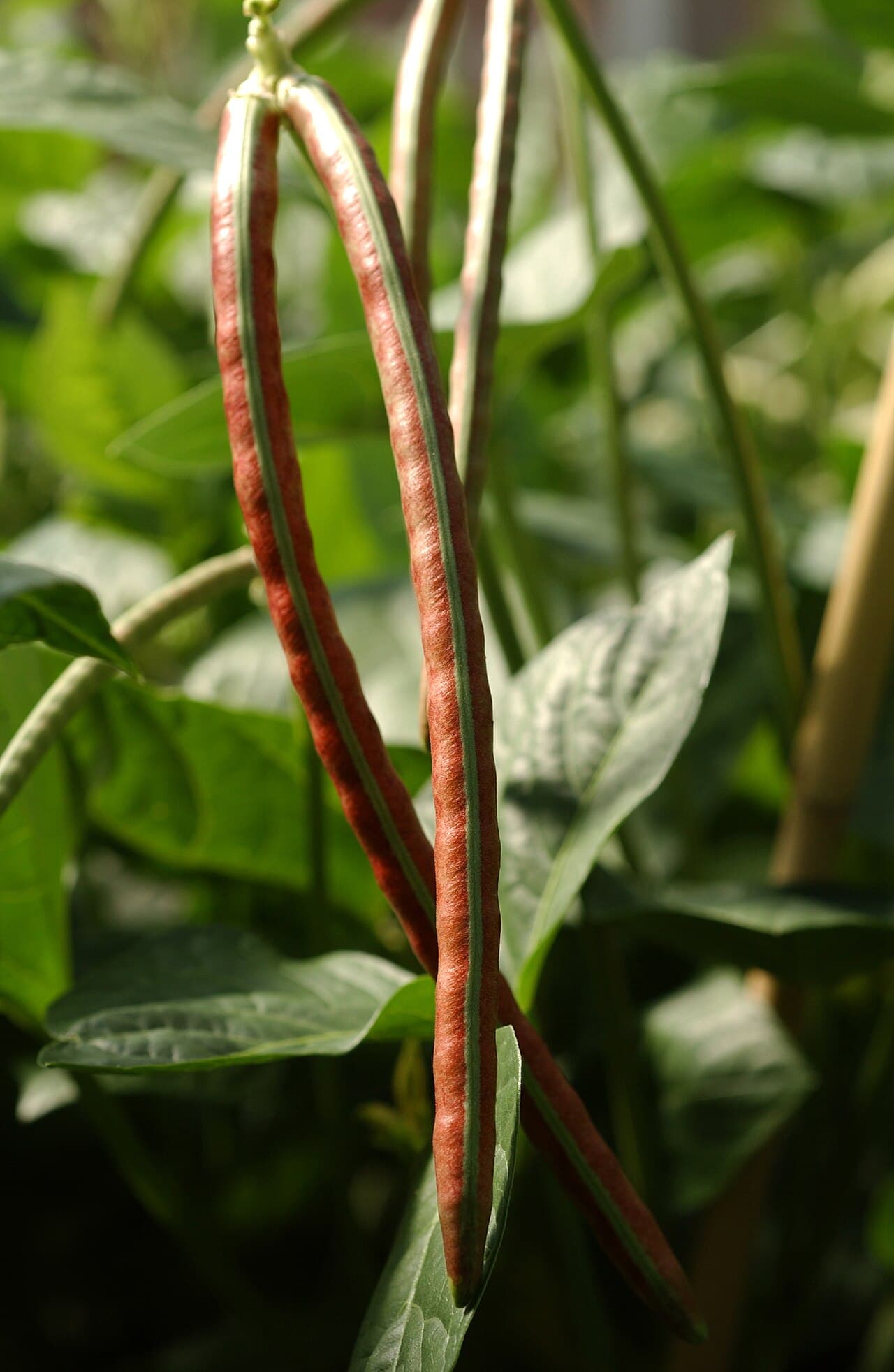
Pick green at about 20 cm for fresh eating, or leave to dry completely for stored beans.
Keeping
Green pods keep four days refrigerated. Dried beans keep two years in a sealed jar.