Fenugreek
Also called: حلبة · Hilba · Methi
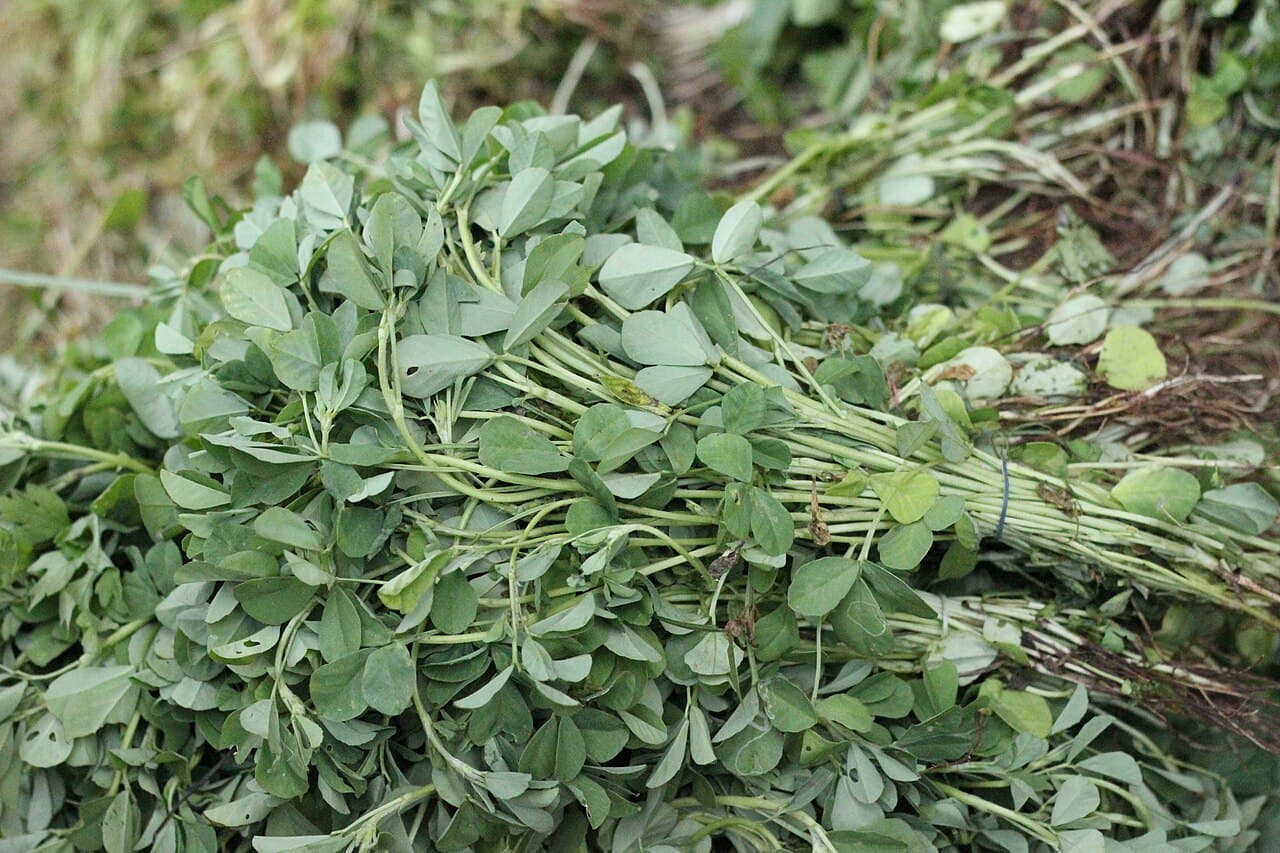
One of the fastest herbs — about 30 days from seed to first leaf. Sow small batches every fortnight from October to February; the leaf (methi) is a staple of both Gulf and South Asian kitchens.
The year at a glance
Each month is split in half. The outline marks now.
Stage by stage
Stage 1 of 7
Seed
Days 0–3
Seed
Days 0–3The seed sits in the soil taking up water and swelling. Nothing shows above the surface — everything is happening underground.
Do now
- Water lightly and often so the soil stays damp but never soaked. Letting it dry out between waterings kills the seed before it sprouts.
- Cover the surface with a thin layer of straw or compost to slow evaporation and steady the temperature.
- Label what you sowed and when. You will need the date to work out the harvest.
Watch for
- A hard crust forming on sandy soil after watering, which traps the sprout underneath. Break it gently.
- Ants carrying small seeds away — a very common problem in Qatari gardens.
In Qatar
Direct-sow thickly in rows; fenugreek dislikes being moved. Soak the seed for a few hours first.
Germination
Days 4–8The seed coat splits: a root pushes down and a shoot pushes up. The two seed leaves that appear are not true leaves — they are the seed’s own food store.
Do now
- Keep moisture constant. The first root is very fine and a single dry day can end the seedling.
- Remove any covering as soon as the first sprout shows, or it will stretch thin looking for light.
- Give bright, indirect light. Direct midday sun will scorch a new seedling within hours.
Watch for
- A long, thin, pale stem: the seedling is not getting enough light and will collapse.
- Sudden wilting with a pinched stem at soil level — damping off, caused by overwatering.
In Qatar
Up in about four days in November soil. The seedlings look like tiny clover, so do not pull them as weeds.
Seedling
Days 9–17The first true leaves appear, shaped differently from the seed leaves. The plant is now feeding itself and the roots are branching fast.
Do now
- Thin crowded seedlings and keep the strongest. Crowding gives you many weak plants instead of one good one.
- Start watering less often but more deeply, to drive the roots downwards.
- Harden the seedling off — build up its sun exposure over a week before transplanting.
Watch for
- Yellowing lower leaves: nitrogen shortage, very common in Qatar’s poor sandy soil.
- Small holes or chewed edges, meaning snails or young grasshoppers.
In Qatar
Fenugreek is a legume and makes its own nitrogen, so skip the nitrogen feed. Thin to 5 cm.
Leaf growth
Days 18–29Leaves multiply fast and the rosette widens. All the energy goes into leaf — which is the crop itself, so speed is the goal.
Do now
- Feed nitrogen every ten days. Leafy crops want more of it than anything else you grow.
- Keep the moisture even. Any drought turns the leaves bitter and tough, permanently.
- Clear competing weeds. Leafy crops root shallowly and lose the competition easily.
Watch for
- Small, thick, dark leaves: the plant is thirsty or the soil is salty.
- Aphids gathering in the heart of the plant, where they are hard to wash out.
In Qatar
It grows fast in the cool months. Water lightly but often; the shallow roots dry out quickly in Qatari wind.
Cut and come again
Days 30–60The plant is at its most aromatic. Regular cutting makes it branch and produce more; leaving it uncut pushes it to flower.
Do now
- Cut from the top just above a pair of leaves, and the stem branches into two.
- Never take more than a third of the plant at once.
- Cut before the midday sun, when the aromatic oils are at their strongest.
- Pinch out any flower buds as soon as they appear to stretch the leaf season.
Watch for
- Woody stems at the base: the plant is ageing and needs a hard cut back or replacing.
- Spider mite in hot dry air, showing as faint speckling and fine webbing.
In Qatar
Cut before the first flowers appear — the leaf turns bitter after them. Sow a fresh batch every fortnight for a continuous supply.
Bolting
Days 61–80Heat or lengthening days convince the plant its life is ending, so it rushes to make seed. The leaves turn bitter and tough.
Do now
- The leaves are past salad use. Cook them if the bitterness is bearable.
- Let the strongest plant finish flowering and collect its seed for another season.
- The flowers pull in beneficial insects, so leave some standing if you have another crop nearby.
Watch for
- Early bolting caused by sowing too late in the season — the commonest mistake in Qatar.
- Seed scattering itself and coming back as a weed next season.
In Qatar
It flowers from February. Let a small patch go: the pods give you the spice, and the seed is next year’s sowing.
End of cycle
Days 81–100The plant’s cycle is over. The roots left behind break down and add organic matter if you leave them.
Do now
- Cut the plant at soil level and leave the roots in place to rot down.
- Sow a crop from a different family in the same spot to break the pest cycle.
- Add compost and cover the soil before the summer heat.
Watch for
- Planting the same family twice running in the same bed.
- Leaving the soil bare in the sun all summer.
In Qatar
Dig the roots in rather than pulling them: the nitrogen nodules feed whatever follows, such as okra or molokhia.
- Water
- Medium
- Salt tolerance
- Medium
- Heat tolerance
- Low
2 L/week in winter, 6 L in summer
Soil preparation
Grows in poor ground — it is a legume and makes its own nitrogen. A light dressing of compost is enough, and no nitrogen fertiliser. Level the surface well because the seed is small.
Pests
Aphids
- Sign
- Clusters on the tender tips and curling young leaves.
- What to do
- Water blast. Fenugreek is harvested so fast that nothing stronger is ever worth it.
Root rot
- Sign
- Sudden yellowing and wilt with brown, slimy roots in wet soil.
- What to do
- Cut back the watering and improve drainage. Do not resow in the same spot straight away.
Common problems
Quick bolting and bitter leaves
- Cause
- Heat above about 25 °C or a late sowing. Fenugreek flowers within weeks in warmth.
- Fix
- Sow between October and January, shade from February, and sow small successive batches.
Patchy germination
- Cause
- A surface that dried out, old seed, or sowing too deep.
- Fix
- Soak the seed six hours, sow 1 cm deep, and keep the surface damp under a light cover.
Picking
Cut the whole plant 3 cm above the soil at 10–15 cm tall, before it flowers; it may regrow once. After flowering the leaves turn bitter.
Keeping
Two days in the fridge fresh. Dried in shade it keeps for months, as kasuri methi.